

NEWYou can now listen to Fox News articles!
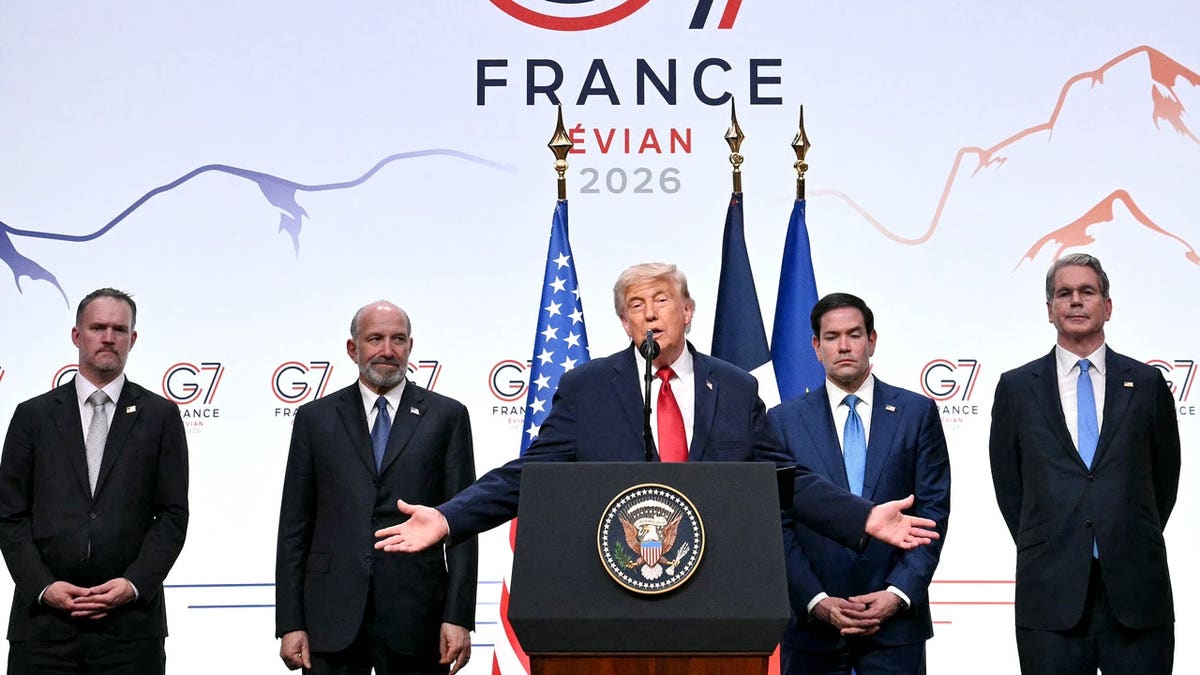
The Iran war has understandably been the focus of international attention. But Russia’s war against Ukraine continues to rage, and there are signs of a positive shift in the Trump administration’s approach to Ukraine. Ukrainian President Volodymyr Zelenskyy and President Donald Trump had a positive meeting at the G7 summit in France, and afterward Trump said, “Russia needs to make a deal.”
Trump also said sanctions on Russian oil can go back on now that the Strait of Hormuz may soon see more ships traverse safely. Right before he left for France, Trump welcomed Ukrainian Oleksandr Usyk, the reigning heavyweight champion of the world, into the Oval Office ahead of the UFC fight on his birthday.
Secretary of State Marco Rubio told Congress Russia’s invasion of Ukraine was a “strategic disaster.” Secretary of War Pete Hegseth said the U.S. will “find a way” to help Ukraine defend itself, and Ambassador Dan Negrea representing the United States told the United Nations that, “Russia’s invasion of Ukraine has been a strategic disaster” and “Moscow cannot achieve its goals on the battlefield.”
The cause of this recent shift is likely twofold. First, Zelenskyy visited Gulf states during Operation Epic Fury to offer to help defend against Iranian Shahed drones, the same ones that Russia fires on Ukraine. The boldness and timing of the visit were a compelling advertisement for what Ukraine can offer the United States and its allies in modern warfare against the China-Russia-North Korea-Iran alignment.
‘PURE HELL’ IN MOSCOW AS UKRAINIAN DRONES STRIKE MAJOR REFINERY SUPPLYING CAPITAL’S FUEL MARKET
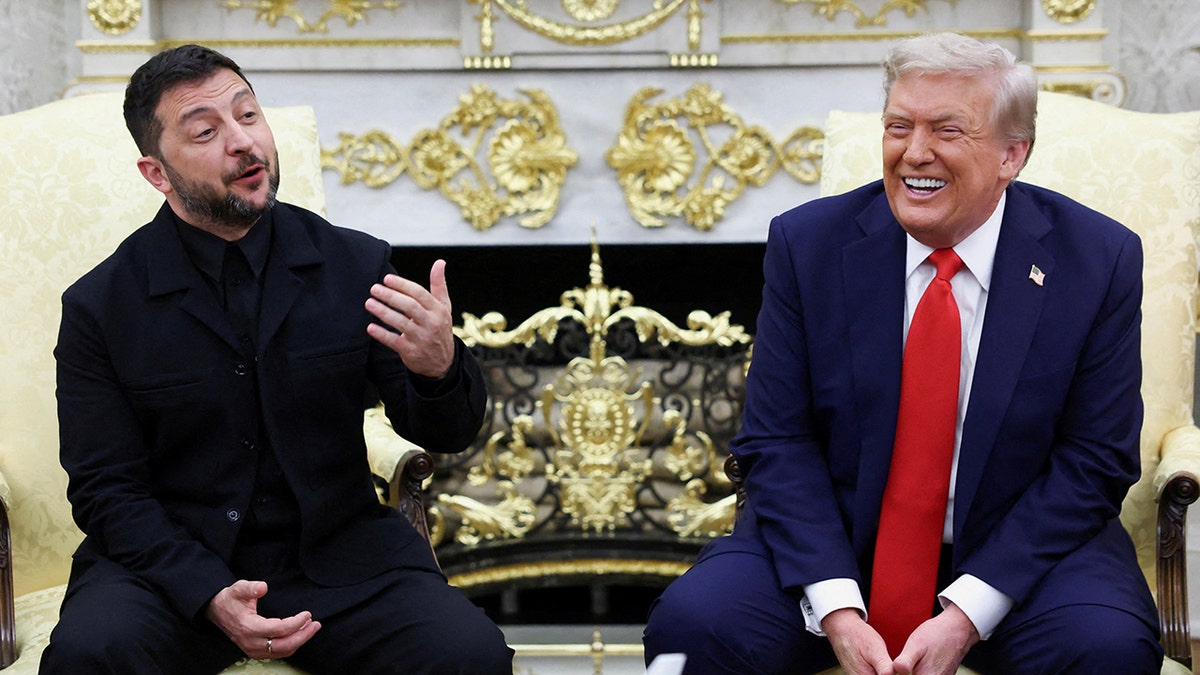
Ukrainian President Volodymyr Zelenskyy gestures as U.S. President Donald Trump reacts during a meeting at the Oval Office of the White House, amid negotiations to end the Russian war in Ukraine, in Washington, D.C., Aug. 18, 2025. (REUTERS/Kevin Lamarque)
And second, Ukraine is making battlefield gains, holding off Russian advances, and even incrementally taking back territory. Ukraine has the momentum and is an asset to its allies in the democratic world. Trump loves a team player and a winner – Ukraine is both.
But Ukrainian gains carry risks. When Ukraine makes progress on the battlefield, Russia often threatens NATO to pressure members to slow or stop support for Kyiv. Russia did this when Ukraine had the momentum in June 2024 and in November 2024 when Ukraine began to successfully strike military targets deep inside Russia.
It is essential right now for the Trump administration to show a commitment to NATO to deter further Russian aggression and compel Moscow to finally abide by a ceasefire. U.S. credible commitments can signal to Russian President Vladimir Putin that he cannot coerce the U.S. and its NATO allies to relax support to Ukraine and that the risks of threatening NATO are far too great.
FINLAND’S FOREIGN MINISTER SAYS UKRAINE ‘IS NOW HOLDING THE CARDS’ AS RUSSIA SIGNALS TALKS
And deterring Putin will ensure Europeans can safely continue to provide the bulk of Ukrainian weapons by purchasing them from American companies. A strong U.S. commitment to NATO may be the most likely way to achieve a ceasefire along the current lines of contact. It would be a great diplomatic achievement for Trump.
But if the Trump administration weakens NATO by withdrawing U.S. forces, stopping key weapons deliveries to Europeans who are willing to buy them, and canceling deployment of a U.S. weapon system out of fear of “provoking” Russia, it courts disaster.
This is why it is alarming that, according to media reports, a staffer in the Department of War recently told NATO allies that the United States will be significantly reducing the number of strategic bombers, fighter jets, drones, submarines and warships dedicated to NATO.
DON’T LOOK NOW, BUT PRESIDENT TRUMP MAY HAVE SAVED UKRAINE. JUST ASK THE RUSSIANS
This is a departure from Trump’s commitment after the 2025 NATO Summit when he said of the alliance, “It’s not a rip-off, and we’re here to help them” touting the indispensable role the United States still has in the alliance.
This report follows similar news of the Pentagon’s decision to remove 5,000 American troops from Germany and to cancel its deployment of long-range strike weapons to the country. It also follows the cancellation of a rotational brigade in Romania, and the cancellation (and subsequent reversal upon Trump’s intervention) of a deployment of additional U.S. troops to Poland.
But Ukrainian gains carry risks. When Ukraine makes progress on the battlefield, Russia often threatens NATO to pressure members to slow or stop support for Kyiv.
The Biden administration’s reactions to Russian threats were to delay and restrict U.S. and NATO support to Ukraine. Concerns about provoking Russia had the perverse effect of rewarding Russia’s dangerous threats, including Russian nuclear saber-rattling. The result was a long war of attrition.
HEGSETH WARNS RUSSIA AS SIGNS POINT TO MOSCOW SHARING INTEL WITH IRAN
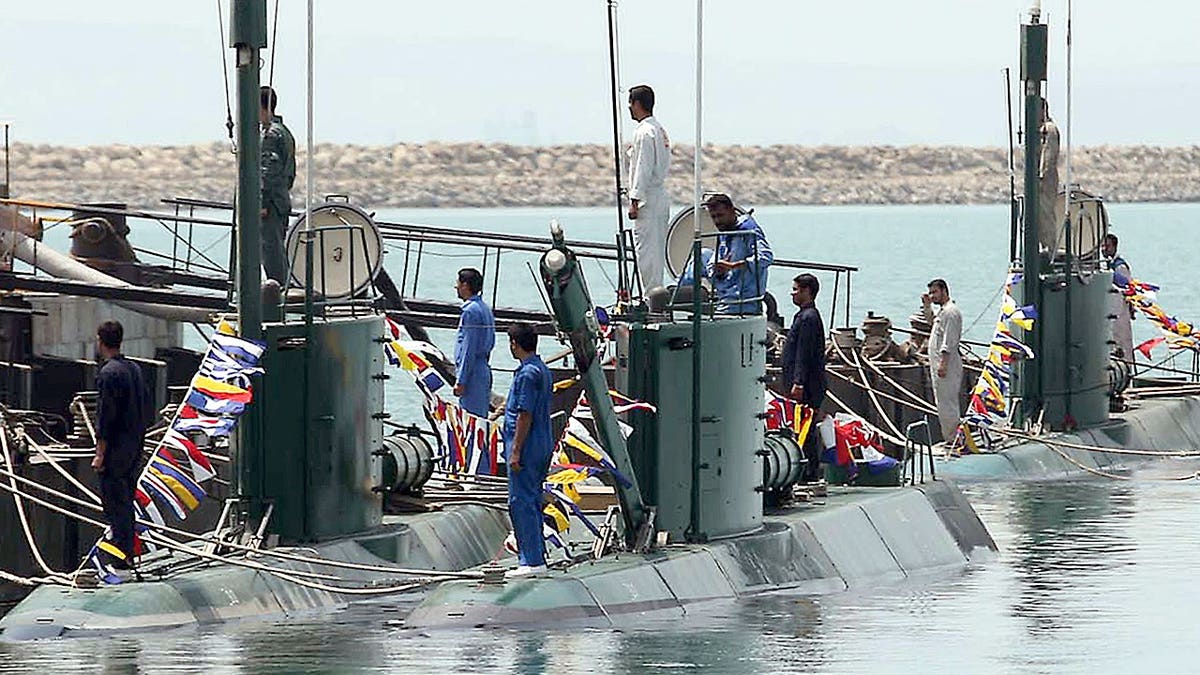
Trump has shown on occasion better instincts, including when he sent a nuclear submarine toward Russia after admonishing Russian mouthpiece Dmitry Medvedev for threatening the United States with nuclear weapons. But he has also called for U.S. troop withdrawals as punishment when allies criticize or oppose other U.S. efforts like the war against Iran.
But withdrawing U.S. forces undermines U.S. interests and therefore isn’t a good punishment. It’s also opposed by Congress. After announcing withdrawals from Germany, Republican chairmen of the House and Senate Armed Services Committees, Mike Rogers and Roger Wicker, issued a joint statement, noting that “Germany has stepped up in response to President Trump’s call for greater burden sharing, significantly increasing defense spending and providing seamless access, basing, and overflight for U.S. forces in support of Operation Epic Fury.”
Shifting the burden of Europe’s defense so that it is better distributed among American allies is a prudent move, especially as the United States must, for the first time, deter two major nuclear adversaries — China and Russia. But the risk of China seizing a moment of opportunity and acting aggressively against vital U.S. interests in the Pacific is more likely if deterrence fails in Europe and Putin foolishly attacks a smaller European nation in NATO’s front.
UKRAINE’S BATTLEFIELD IS TRANSFORMING THE FUTURE OF NATO
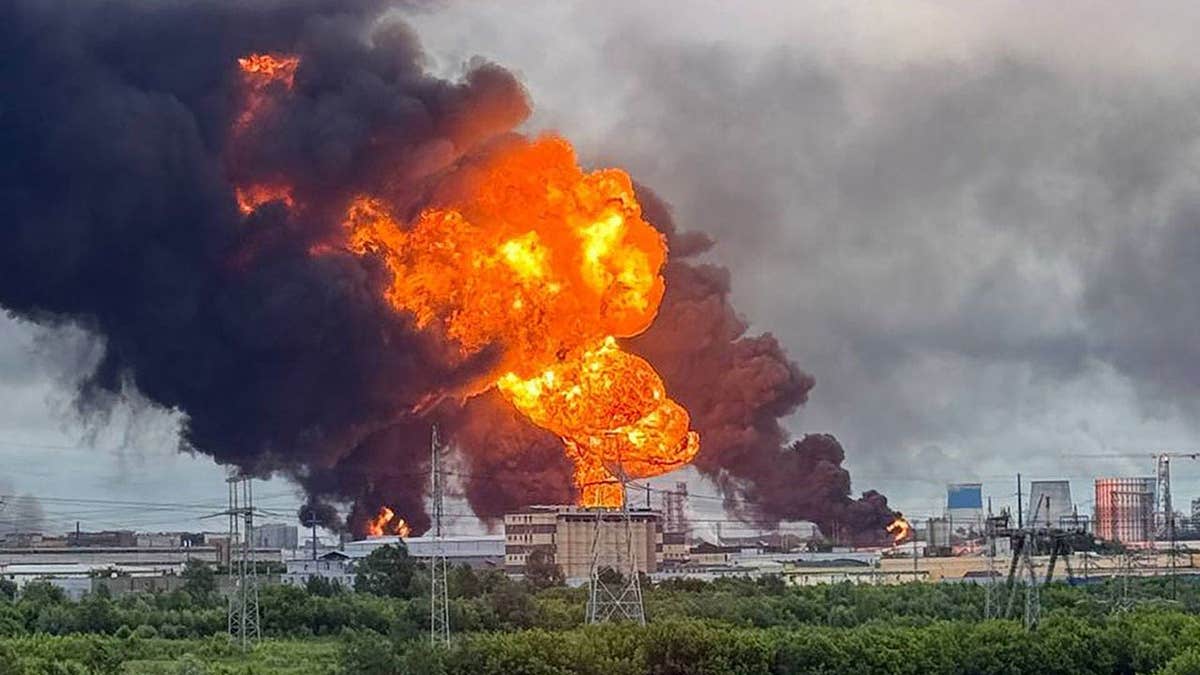
Smoke and flames rise over Moscow on June 18, 2026, following a Ukrainian drone attack that hit the Kapotnya oil refinery and other targets in the Russian capital. (East2West)
Deterring war in Asia then, is directly linked to strengthening Ukraine and deterring further Russian aggression against NATO. And while Europeans are now providing the bulk of support to Ukraine due to Trump’s urging, and Ukraine is asking for relatively little from the United States beyond interceptors for the Patriot system, that ally support can only continue if those Europeans are also secure. Backing away from Europeans now risks undermining NATO rather than rebalancing it.
While Europeans are stepping up, the Pentagon would be wise to maintain its troop levels in Europe, but shift numbers to NATO’s front: Poland, Romania and the Baltic nations. At the same time, while the United States is assessing its inventory of Tomahawk missiles, it should ensure Germany ranks high on the list for receiving these weapons.
CLICK HERE FOR MORE FOX NEWS OPINION
Russia will insist the sale is provocative while simultaneously deploying hypersonic and nuclear-capable Oreshnik missiles, with a range that spans all of Europe. Countering Russia’s threats with Tomahawk deployments, is stabilizing. And if the United States wants allies to purchase arms from American companies, it has to be a reliable and willing seller.
This report follows similar news of the Pentagon’s decision to remove 5,000 American troops from Germany and to cancel its deployment of long-range strike weapons to the country.
Trump should also reverse the Pentagon’s effort to cancel the U.S. deployment of a long-range strike brigade. Trump withdrew the United States from the Intermediate-Range Nuclear Forces (INF) Treaty in 2019 in response to Russian treaty violations.
CLICK HERE TO DOWNLOAD THE FOX NEWS APP
This timely decision enables the United States to deploy this category of weapons. The State Department has been pursuing strategic stability talks with Russia since the expiration of the New START treaty. The Pentagon’s decision to cancel the planned deployment of long-range strike weapons undermines those efforts without securing Russian concessions.
The 2026 NATO Summit is approaching. Trump should embrace the alliance while encouraging allies to continue investing in defense, especially now that Ukraine has the momentum. The president rightly lauds the value of peace through strength. That means rejecting calls from inside his own administration to retreat or embracing the excessive risk aversion that characterized his predecessor and led to more war.
CLICK HERE TO READ MORE FROM REBECCA HEINRICHS